

At the core of my message is this concept:
“We don’t choose what we grieve, but we can choose how to grieve.”
No one gets to choose the losses they endure. Sometimes it feels as though we’ve been inflicted with them—and in many situations, we have.
As mentioned last week, we have the option of being in the throes of grief or choosing a more active role in how grief is lived out. This can sound like a nice idea, but having the desire and actually living it out can feel like a big step, especially when you’re walking the path alone.
One of my favorite sessions is an active learning moment, and it usually goes like this:
The person experiencing loss has a major task they really want to do. It’s usually something overwhelmingly connected to their loss and packed with memories and emotions. They know the benefits of doing it and they want to do it, but something inside of them is physically holding them back. They have gotten themselves so wound up that it feels impossible.
Then comes this question:
“What happens if we just do a little of it right now while we’re talking?”
In that moment, we usually get to notice fear and respond differently:
“What happens if we hold the fear, set it off to the side, and do a little of the task anyway?”
How often we think that emotions are us—that we don’t have agency when it comes to emotions.
Fear is a choice. Courage is a choice.
The movement from one to the other has felt impossible for far too long.
If you want to experience this right now, just take a look at this image below. Someone shared this with me years ago, and while accurate, it evoked a deep fear. Moving from one oval to the other looks impossible. It’s strange to think that comfort can create fear. I suppose it’s true, but this image just drives the idea deep into my brain: “Stay comfortable.”
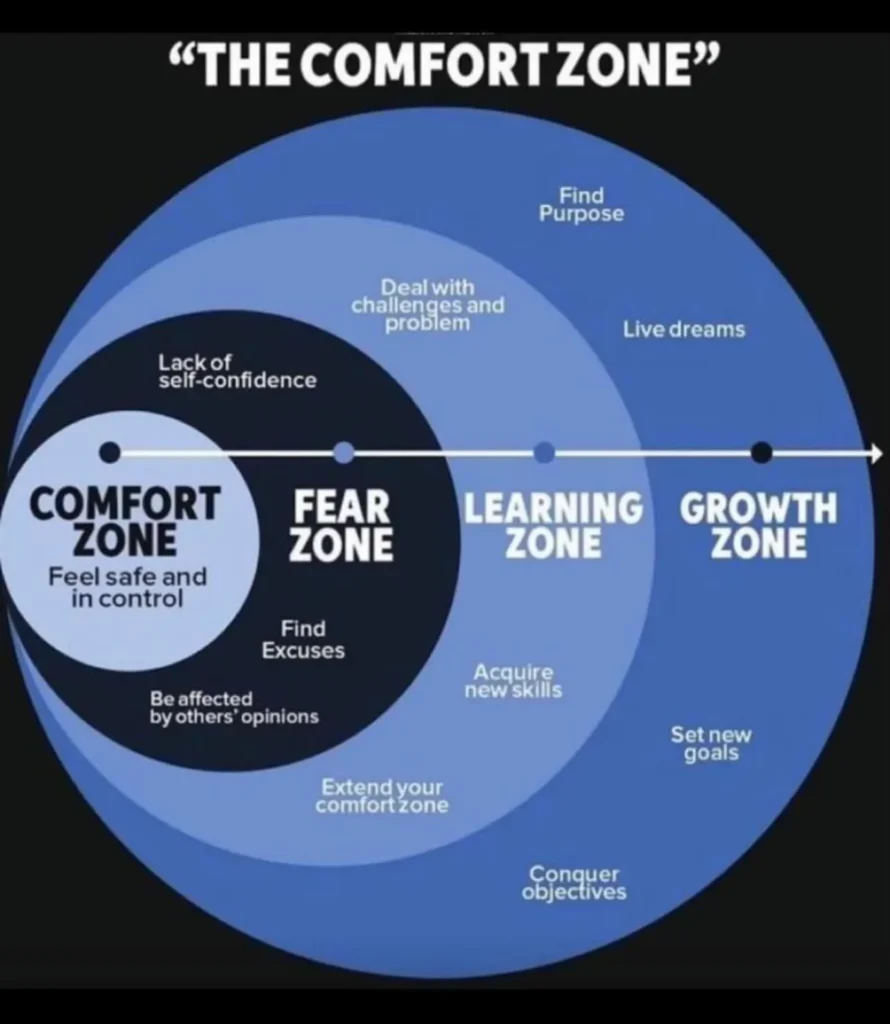
Do you feel it too?
This action-oriented coaching session moves seamlessly from one oval to the other, and it only requires three core things:
- Write it down
- Lean on a witness
- Use small language
1. Write It Down
When we pick up a pen and put a task on paper, an instant connection is made between our eyes, our brain, and the rest of our body. When we have a large task that we want to do, we often do everything to keep ourselves from noticing it—especially keeping it from becoming visual.
Once the idea hits the paper, it becomes a part of ourselves. And no, it’s not the same if you type it into a digital task list.
2. Lean On A Witness
Grief needs a witness, and this part of grieving is no different. If you can’t identify a witness, think about those who have been there for you as you’ve walked through this challenging time. This person has the feeling of being “safe.”
A safe person is not someone who disappeared, used a platitude when they engaged with you, or immediately made it about their own story. A witness simply sits with you and listens.
In this case, a witness also offers necessary accountability. They will ask key questions, allow you to explore your feelings to a certain point, and then offer you a hand to walk forward with courage. A witness can be a present body so you can work side-by-side.
3. Use Small Language
I’m constantly reminded that “Worry Is Misplaced Imagination.” Worry uses big, bold words like “NEVER” and “IMPOSSIBLE.”
To keep your fear and worry at bay and redirect your imagination, I love using a simple phrase:
“I’m just going to do this thing now.”
It’s a simple trick to make the brain feel safe and realize it’s just tackling a small piece of the puzzle.
Do you know what the “growth zone” sounds like?
“Wow, this is not as bad as I thought it would be,” or “I feel lighter,” or “I can’t believe I didn’t do this sooner.”
There is really cool stuff on the other side of fear.
So, what have you imagined to be impossible? What are you going to do anyway, today?